 If you’ve ever hustled to the court only to find your basketball flatter than yesterday’s soda, rejoice — technology has a solution (albeit an extravagant one). Meet the new silent airless 3D-printed basketball, a futuristic piece of sports equipment that promises you’ll never need a pump or patch kit again. Looking like something you might see Marty McFly use, this futuristic basketball would feel right at home next to the self-lacing shoes from Back to the Future.
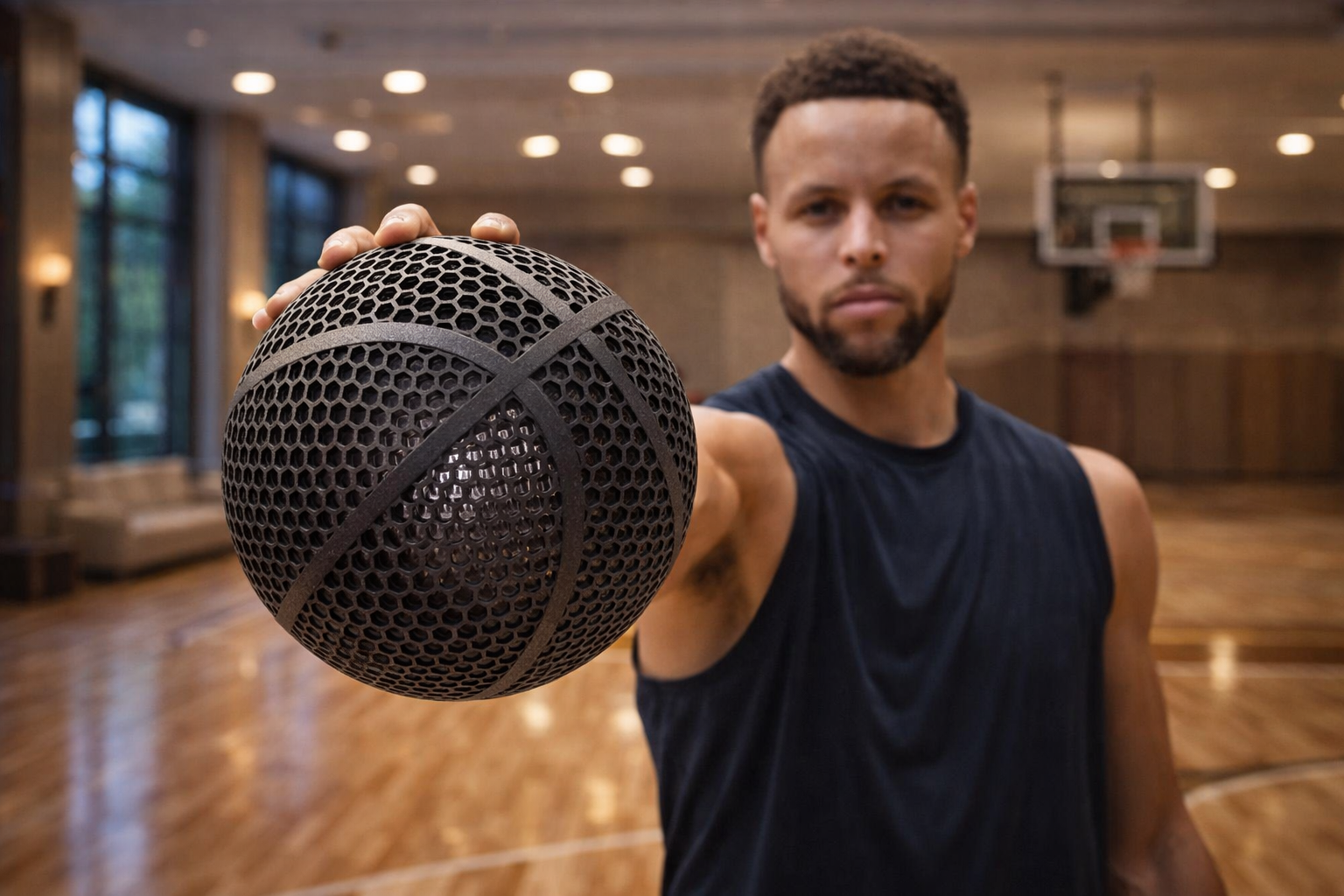
This is not your grandpa’s leather ball. It looks like something out of a sci-fi movie: a honeycomb-lattice orb full of holes that somehow bounces like a regular basketball. The first time you see one in person, your brain does that little “this is wrong” glitch — and then you bounce it and realize it’s… annoyingly legit.
In this review, we’ll break down how an airless basketball works, whether it bounces right, how it performs on different surfaces, the real pros and cons, typical cost, how DIY versions work, and the most common complaints. We’ll also cover the big headline feature people care about most: how quiet it is compared to a regular basketball.
How Does an Airless Basketball Work Without Air?
The trick is the 3D-printed lattice structure.
Instead of a rubber bladder filled with air pressure, an airless basketball uses a spring-like network of polymer that flexes when it hits the ground and then snaps back to shape. That rebound is what gives you bounce.
Think of it less like a balloon and more like a shock absorber made of hundreds (or thousands) of tiny connected beams. When the ball compresses, the lattice stores energy. When it rebounds, it releases that energy — basically doing what pressurized air usually does.
The holes aren’t just there to look futuristic (although yes, the “alien basketball” aesthetic is doing a lot). They also allow air to pass through while the structure compresses, keeping the bounce consistent and preventing weird internal air resistance.
A key engineering challenge is feel. Early versions were too rough or too “plastic.” To get closer to the familiar hand-feel of a normal ball, manufacturers use smoothing, sealing, and finishing processes so the surface doesn’t feel like you’re palming a piece of patio furniture.
Bottom line: it works by replacing air pressure with engineered structural elasticity.
Do Airless Basketballs Bounce Right?
Surprisingly, yes — or at least pretty close.
A quality airless basketball is designed to hit the same basic performance benchmarks as a regulation ball: weight, size, and rebound behavior. In normal dribbling and casual play, most people would say it bounces “right” within a few minutes of using it.
That said, “close” isn’t always “identical.”
The bounce can feel slightly different depending on:
-
The exact lattice pattern
-
The polymer used
-
The surface you’re playing on
-
Temperature (polymers can stiffen in cold)
The most consistent benefit is that the bounce doesn’t degrade the way an underinflated ball does. There’s no “this ball feels dead today” because you left it in the car overnight and the PSI dropped. An airless ball is what it is, every time.
So yes: airless basketballs bounce, and they can bounce well. You just shouldn’t expect every model on the market to feel identical — because the tech isn’t standardized yet. Some of the cheaper models will feel more like a toy or a gimmick. But some of the higher end airless basketballs can really feel like a satisfying replacement for a traditional leather ball.
How Quiet Is an Airless Basketball Compared to a Regular Basketball?
This is the part that sells the whole concept.
A traditional basketball makes sound because:
-
The inflated bladder compresses and rebounds quickly
-
The outer rubber/leather snaps against the floor
-
Vibrations travel through the ball and the surface and amplify
An airless ball has a built-in dampener: the lattice.
When it hits the ground, the structure flexes and disperses impact energy through a web of beams instead of one pressurized chamber. That reduces the sharp “crack” and replaces it with a softer, more muted thud.
In plain terms:
-
A normal basketball is loud and punchy
-
An airless basketball is muffled and low-volume
Why the Reduced Noise Matters
If you’ve ever tried to dribble indoors, you already know this:
-
Apartments don’t love basketball practice
-
Garages echo like a drum
-
Gyms can turn into a sonic assault during drills
A quieter ball has legitimate value for:
-
Indoor skill work
-
Late-night shooting practice
-
Youth training facilities
-
Home gyms
-
Anyone trying not to be “that neighbor”
Now, is it completely silent? No. That’s marketing language doing what marketing language does. You’re still bouncing something on a hard surface. But compared to a standard ball, it can be dramatically quieter, especially indoors.
How Do Airless Basketballs Perform on Different Surfaces?
Performance varies by design quality, but here’s the realistic expectation by surface type.
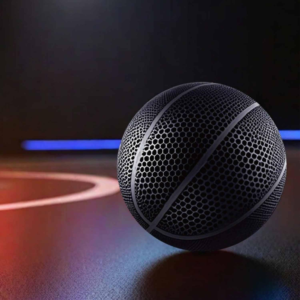 Hardwood Gym Floors
This is where airless basketballs tend to feel the most “normal.”
Hardwood provides predictable rebound and consistent friction. Dribbles feel clean, and the ball’s muted sound is most noticeable here — fewer echoes and less slap compared to a traditional ball.
Grip tends to be fine indoors as long as the surface finish is properly textured and not overly smooth.
Concrete / Street Courts / Driveways
This is where airless balls make the strongest argument for their existence.
Outdoor courts chew up regular balls. An airless ball doesn’t care about punctures because there’s nothing to puncture. Sharp debris, cracks, random gravel — the ball can keep going.
That said, outdoor courts introduce one unique issue: the holes.
Small pebbles, grit, or dirt can occasionally get stuck in the lattice. It usually doesn’t ruin play, but it’s not ideal. You may find yourself shaking the ball like a maraca to get a rock out.
Asphalt
Similar to concrete, but usually rougher.
Expect excellent durability benefits and a slightly “softer” feel on bounce depending on the lattice stiffness. Abrasion resistance matters here — cheap models may wear down faster over time.
Rubberized Outdoor Courts
Rubber courts have a little give, which can slightly lower bounce height for any ball.
The airless ball tends to feel controlled here. The quieter bounce remains noticeable, and traction is often good. This is one of the better all-around environments for the concept.
Synthetic Indoor Flooring
Generally good.
These floors behave like a hybrid between hardwood and rubber depending on the facility. Expect stable performance, though some extremely smooth surfaces can make an overly slick airless ball feel less grippy.
Wet Surfaces
A normal ball can get slick when wet — airless balls can too.
The difference is that water can pass through the lattice, which reduces “water pooling” but introduces cleanup. If you play in damp conditions, you’ll want to rinse and dry the ball afterward to maintain grip and prevent grime buildup.
Pros and Cons of an Airless Basketball
Pros
Never goes flat. No pump, no needle, no pressure checks, no dead ball days.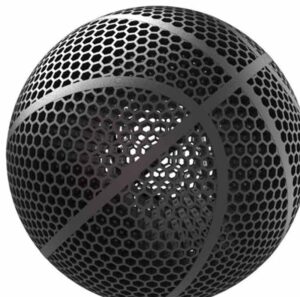
Highly puncture-resistant. Street courts stop being a death sentence.
Consistent bounce. No PSI fluctuation from temperature or slow leaks.
Quieter dribbling. Great for indoor training or shared spaces.
Low maintenance (in the “no air” sense). You’re not inflating it, ever.
Novelty factor. People will ask to try it. A lot. Having an airless basketball on the courts is a sure-fire way to start conversations, begin passionate debates, and make lifelong friends.
Cons
Cost. The premium models are wildly expensive, and even cheaper ones aren’t cheap.
Feel is slightly different. Some players won’t care. Some will hate it immediately.
Cleaning is more annoying. The lattice can trap grit, especially outdoors.
Not standardized. Different brands and designs vary more than traditional balls do. You’ll have to do more research than usual to find a ball that really works.
Not widely used in official play. No major league is replacing game balls with this tomorrow. If you’re buying one for casual or novelty use, have at it; but, it’s not going to be allowed in any serious competition any time soon. Even the old heads at your local rec league at the YMCA might side eye it.
How Much Do Airless Basketballs Cost?
Right now, airless basketballs range from:
- Between $25 – $60 for some of the cheaper more gimmicky toys
- Hundreds of dollars for many consumer models
- Up to thousands for limited-run, high-end technology showcases
The price is high because manufacturing is still expensive and the category is new. As production scales and competition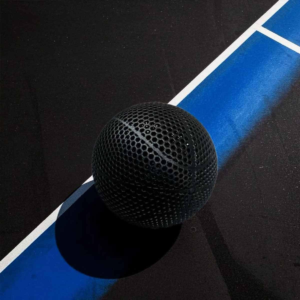 grows, prices should come down — but at the moment, this isn’t a casual $30 purchase.
Think of it as early-adopter gear. You’re paying for innovation, not just utility. If you’re looking for a great airless basketball that works that still comes in at a relatively reasonable price, check out the WITO Silent Airless Basketball available for purchase on Amazon by clicking the button below:
Can I Make My Own Airless Basketball? How?
Yes, you can — if you’re willing to take on a fairly serious DIY project.
The Basic DIY Paths
1) 3D print your own lattice ball
-
You need a printer with a large build volume (or print in multiple parts and assemble)
-
You need a proven airless basketball model file (STL)
-
You need the correct filament — ideally flexible and resilient
2) Use high-rebound specialty filaments
Some filaments are designed to return energy better than standard PLA or PETG. These can improve bounce, but they still vary in durability.
3) TPU for durability (but worse bounce)
TPU is tough and flexible, but it often produces a weaker bounce. Great for a backyard “never breaks” ball, not always great for realistic play.
Realistic Expectations for DIY
DIY balls can be fun and surprisingly playable, but they usually involve trade-offs:
-
Great durability but mediocre bounce
-
Great bounce but higher risk of cracking
-
Long print times and post-processing work
If you want “just like a real basketball,” DIY is possible but harder than it looks.
Common Complaints
These show up again and again:
“It feels weird.” Even if bounce is close, the hand-feel isn’t identical to leather.
“It’s too expensive.” Not much debate there.
“It collects dirt.” Outdoor courts can turn the lattice into a debris trap.
“Grip isn’t the same.” Especially on dusty courts or sweaty indoor runs.
“It’s not truly silent.” It’s quieter, not magical.
“Not everyone agrees it’s worth it.” Some people want innovation. Others want a ball that costs less than their electric bill.
Conclusion: Should You Buy an Airless Basketball?
The airless 3D-printed basketball is one of the most interesting pieces of sports gear innovation we’ve seen in a long time.
It solves real problems:
-
No flats
-
Strong durability
-
Consistent bounce
-
Significantly reduced noise
And it introduces a few new ones:
-
High cost
-
Slightly different feel
-
More annoying cleaning
-
Variability between models
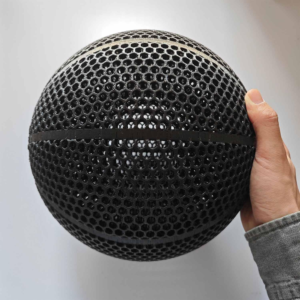 If you’re a serious hooper who plays in leagues, you probably don’t need one. But let’s be honest… we all kinda want one. If you’re a street player tired of destroying balls on rough courts, or someone who wants to practice indoors without waking everyone within a three-unit radius, an airless ball actually makes a lot of sense.
Just keep your expectations calibrated.
It’s not a magical perfect replacement for every basketball. It’s a new category with clear strengths — and a few quirks you’ll want to tolerate if you’re buying into the future early. Regardless of what basketball you choose to you never forget, ball is life.