

I’ll be the first to admit it: I hate winter weather. If you’re anything like me, you dread shoveling snow, scraping ice off the windshield, and bundling up in five layers just to step outside. The good news is that you don’t have to put up with frigid winters forever. The United States is huge, and there are plenty of places where you can enjoy mild temperatures year-round. In this article, I’m counting down the 7 best states for people who hate winter weather.
I’ve considered a bunch of factors: average winter temperatures, how often (if ever) it snows or ices over in the state, the kind of winter activities and culture you’ll find, and even what the locals say about their climate. Additionally, I looked into practical stuff like cost of living and overall quality of life when making the determinations. These aren’t just snowbird vacation spots (though you could certainly spend winters there) – they’re great for year-round living so you can permanently escape the cold. We’ll start at number 7 and work our way to the ultimate winter-hater’s paradise at number 1. Grab your sunglasses and leave the snow boots behind – let’s find your next warm and sunny home!
7. South Carolina
-
Average Winter Temperature: ~46–50°F (8–10°C) statewide average (warmer on the coast; daytime highs in the 50s to 60s°F).
-
Average Annual Snowfall: ~1 inch or less (coastal areas often see 0 inches; any snow is rare and usually melts quickly).
-
Average Cost of Living: ~5% below the U.S. average (Cost of Living Index ~95).
Why South Carolina is Great if You Hate Winter:
South Carolina offers a mild, short winter that barely deserves to be called “winter” compared to northern states. If you cringe at the thought of snow, you’ll be happy to know that snowfall is almost nonexistent in most of South Carolina. Along the coastal Lowcountry – in charming cities like Charleston and Hilton Head – it’s uncommon to see temperatures dip below freezing. Daytime winter highs often hover in the upper 50s to 60°F (around 15°C), meaning you might just need a light jacket on the chilliest days. Many locals joke that if they see a single snowflake, the whole state almost shuts down. As someone who grew up shoveling driveways, I find South Carolina’s lack of snow positively delightful. Instead of blizzards, your winter might consist of a little bit of rain and a lot of sunny, crisp days. It’s the kind of place where you can comfortably take a stroll outdoors in January and not lose feeling in your face – a big win for winter haters.
Winter Activities and Lifestyle:
In South Carolina’s mild winter climate, you can enjoy outdoor activities all year. Golf is huge here – the state is famous for its golf courses, especially around Myrtle Beach, and winter barely slows down tee times. If you love the beach, you can still walk the shores of the Atlantic in the winter months; the water will be chilly, but the scenery is gorgeous and you won’t be bundled up like an Eskimo. I’ve spent December days in Charleston where locals and tourists alike dine on patios with just a light sweater, enjoying the sea breeze without chattering teeth. South Carolinians still get to experience a change of seasons (leaf color in fall, flowers in spring), but without the bitter cold part of the cycle.
Culturally, you’ll find that the holiday season here might feel different – think holiday boat parades and festive lights on palmetto trees, since a white Christmas is practically unheard of. Many residents from up north have relocated to South Carolina precisely because they were tired of harsh winters, and you’ll often hear them say they don’t miss the snow one bit. The locals who grew up here consider a 45°F morning “freezing cold,” which just shows how spoiled you become when winters are this mild!
Cost of Living and Other Perks:
South Carolina adds to its appeal with an affordable cost of living. Overall expenses (housing, groceries, etc.) tend to be lower than the national average. This is great news if you’re moving from a more expensive northern city – your dollar can stretch further in the Palmetto State. Housing is reasonably priced, especially outside of the major tourist spots. A lower cost of living means you can enjoy the state’s pleasant climate without breaking the bank. The state has also seen an influx of new residents in recent years, many drawn by the combination of friendly Southern culture, growing job opportunities, and of course, gentle winters. Places like Greenville and Charleston are booming and often make “best places to live” lists, offering a nice balance of modern amenities and that easy-going Southern charm.
Are There Any Winter Downsides?
Honestly, South Carolina’s winters are about as easy as it gets, but there are a couple of things to be aware of. The state’s northernmost and upstate regions can get a bit cooler. Every once in a while – maybe once every few years – those areas might see a light dusting of snow or a brief ice storm. It’s usually gone within a day or two, but if you truly never want to see a single flake, you might stick to the coastal and midland areas where snow is virtually unknown. Also, keep in mind that what South Carolina skips in winter, it makes up for in hot, humid summers. From June through August it can be quite steamy (90°F+ with high humidity), and the region is prone to thunderstorms and the occasional hurricane threat in late summer. But if your priority is escaping the cold, South Carolina certainly delivers – you’ll be trading snow boots for flip-flops and enjoying mild weather nearly all year.
6. Nevada
-
Average Winter Temperature: ~32°F statewide average due to mountains, but much warmer in the south. For example, Las Vegas January highs are around 58–60°F (14–16°C) with lows in the upper 30s°F.
-
Average Annual Snowfall: Southern Nevada (Las Vegas): ~0 inches (snow is extremely rare and doesn’t stick); Northern Nevada (e.g. Reno) ~22 inches (significant snow in the mountains).
-
Average Cost of Living: ~at the national average (Index ~100) – some areas cheaper; no state income tax.
Why Nevada is Great if You Hate Winter:
When many people think of Nevada, they picture dry deserts and the bright lights of Las Vegas – not snowstorms. In the southern part of the state, especially around Las Vegas and nearby cities, true winter weather is almost non-existent. In Las Vegas, daytime temperatures in December and January often reach the upper 50s or 60s°F, and nights cool down to the 40°F range. You might need a jacket after sunset, but you’ll rarely (if ever) see a frost on your windshield. Snowfall in Las Vegas is basically zero – on the very rare occasions it does flurry, it makes the news and melts almost immediately. This means no shoveling, no snow boots, and definitely no driving on icy roads for Vegas residents. The southern Nevada climate is dry, with low humidity, so even when it’s a bit cool at night, it doesn’t feel bone-chilling. For those of us who despise winter, Nevada’s Mojave Desert climate can feel like a salvation in the winter months. Plus, who doesn’t want to feel like they are living in the middle Fallout New Vegas?
Year-Round Activities and Lifestyle:
Nevada offers a surprisingly great outdoor lifestyle in winter – especially in the south. While much of the country is hunkered down by the fireplace in January, Nevadans in places like Las Vegas or Henderson are hitting the hiking trails. Winter is actually one of the best times to explore the desert landscapes. You can take a day trip to Red Rock Canyon or the Valley of Fire and comfortably hike without the oppressive heat of summer. I’ve gone on January hikes in Red Rock Canyon in a T-shirt by midday, marveling that it was the dead of winter. Golf courses around Las Vegas stay open year-round, and it’s not uncommon to see people playing a round in the middle of January.
Culturally, Las Vegas and southern Nevada have adapted to having mild winters – you’ll see outdoor concerts and events even in winter months (something that’s a fantasy in, say, Minnesota). If you do find yourself longing for a taste of winter sports, you’re only an hour’s drive from Mount Charleston, a mountain near Vegas that does get snow. A lot of locals will take a quick trip up there to see a bit of snow or go sledding, then come back down to the valley where it’s mild. It’s like having winter on-demand: you see it if you want, but it never bothers you at home.
Cost of Living and Practical Benefits:
Nevada is attractive not just for its climate but also for practical reasons. The cost of living in many Nevada communities is around the national average, and in some cases cheaper. Las Vegas, for example, has historically had affordable housing compared to nearby California (though prices have risen in recent years with so many people moving in). One big financial perk: Nevada has no state income tax. That’s a huge draw for many retirees and workers relocating from high-tax states. Keeping more of your paycheck or retirement income while enjoying sunny winter weather – that’s a pretty sweet deal.
The economy in Nevada isn’t just casinos; Las Vegas has grown with new industries, and cities like Reno (in the north) have also become tech hubs. So you might find good job opportunities if you’re working, or just enjoy the relative affordability if you’re retiring. And let’s not forget entertainment: in and around Vegas there’s endless entertainment, dining, and nightlife options which are year-round. Winter doesn’t slow anything down here – the show must go on. The shows run late, the restaurants have outdoor seating with heaters, and tourists flock in because the weather is so pleasant compared to just about anywhere.
Beware of Regional Differences:
Nevada is a state of contrasts. While southern Nevada is a haven for those who hate winter, northern Nevada is a different story. If you were to move to Reno, for instance, you’d experience a more traditional winter: it gets cold and it snows there (Reno sees around 20+ inches of snow annually, and nearby Lake Tahoe in the Sierra Nevada mountains gets dumped with snow – it’s actually a famous ski area). So if zero snow is your goal, stick to the southern part of the state. Las Vegas, Henderson, Boulder City, and Mesquite are good bets for warm winters.
Also, remember that while winters are mild, summers in Nevada are scorching – especially down south. From June through August, Las Vegas routinely climbs above 100°F (38°C). It’s a dry heat (which is easier to tolerate than humid heat for many people), but it’s still extreme. You’ll become good friends with air conditioning in the summer months. The trade-off is that your reward is a gorgeous, mild winter and a glorious spring and fall. To me, it’s worth it, but it’s something to consider for year-round living. Overall, if you want to live where winter barely exists, Nevada (specifically the southern half) deserves a spot on your list.
5. Texas
-
Average Winter Temperature: ~48°F (9°C) statewide average. In Central & South Texas, winter daytime highs are typically 60–70°F (15–21°C). For example, Austin’s average January high is ~62°F, and Brownsville (far south) is around 70°F.
-
Average Annual Snowfall: Roughly 1 inch or less in most populated areas. (North Texas cities like Dallas: ~1–2 inches per year; Central and South Texas: usually 0 inches with only rare flurries or ice every few years).
-
Average Cost of Living: ~8% below U.S. average (Index ~92). Texas also has no state income tax, making it financially attractive.
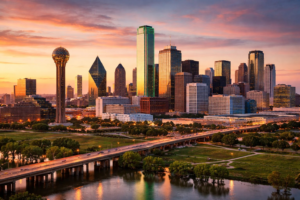
Why Texas is Great if You Hate Winter:
They say everything is bigger in Texas – and that includes the temperature swings. But for the most part, Texas winters are short and mild, especially compared to the brutal cold up north. If you settle in central or southern Texas, you might forget what a snow shovel even looks like. Many parts of Texas hardly see any snow or ice. For instance, cities like Houston, San Antonio, and Austin generally have winter highs in the 60s°F (around 15–20°C). It can get cooler at night (40s°F are common for lows), but daytime is often very pleasant. I’ve spent a January in Austin in a T-shirt, enjoying 65°F sunshine while my friends back in the Midwest were digging out their cars.
If you go further south in Texas, to the Rio Grande Valley (places like McAllen or Brownsville near the Gulf of Mexico), it’s even warmer – winter days in the 70s°F are not uncommon there. Snow in these parts of Texas is virtually non-existent. On the rare occasion it does sleet or snow a tiny bit (maybe once a decade), it’s such a novelty that people literally come outside to marvel at it, and it typically melts by noon. This means if you absolutely hate winter, Texas can offer you huge swaths of territory where you’ll rarely (if ever) see snow or feel sub-freezing temperatures.
One thing to note: Texas is huge and climate varies. The Texas Panhandle (far north, places like Amarillo or Lubbock) gets real winters with snow and freezing temps, and even Dallas/Fort Worth in North Texas sees some ice or snow most winters (just a couple inches, but still). However, the majority of Texans live in the central and southern regions where winters are extremely mild. In fact, winter is often called the best time of year in Texas – the summer heat breaks and you get a few months of gorgeous weather. If you loathe winter, you’ll love that feeling of wearing a light jacket in January or enjoying a sunny 65°F afternoon in February. Many Texans who’ve moved from colder climates will tell you they moved to get away from snow, and they don’t regret it one bit when January rolls around.
Winter Culture and Activities:
Because winters are so moderate, Texans definitely take advantage. Outdoor activities and events go on all year. In the winter months, you’ll find tons of festivals, rodeos, and markets continuing as if it were spring. For example, Houston often has its big rodeo and livestock shows kicking off in late winter (March) when weather is mild. In the dead of winter (December/January), you can comfortably have outdoor BBQs or go for hikes in many Texas state parks without needing heavy winter gear. One of my personal favorite memories is visiting San Antonio around Christmas – the famous River Walk downtown is all lit up with holiday lights, and people are strolling along the river in light sweaters, sipping margaritas outdoors. It’s a far cry from the frigid, gray winter scenes up north.
You’ll notice that locals do get a little dramatic when the temperature dips into the 40s. Culturally, most Texans aren’t accustomed to snow, so if there’s even a hint of a freeze, schools and businesses might delay opening. It’s honestly because they see so little ice or snow that even a slight chance of it is a big deal. But nine times out of ten, winter days are just cool and dry.
There’s also a fun phenomenon: many “snowbirds” from colder states spend winters in Texas. The Rio Grande Valley in southern Texas, for example, has a whole community of winter residents (often retirees) who drive their RVs down or have second homes there to escape northern winters. When you have 70°F weather in January and very affordable living costs, it’s easy to see why Texas is appealing for winter refugees.
Living Costs and Practical Stuff:
Speaking of affordable – Texas has a relatively low cost of living. Housing in Texas is generally more affordable than the national average (though big cities like Austin have gotten pricier lately due to growth). Groceries, transportation, and other expenses are at or below national averages in many Texas cities. Plus, Texas famously has no state income tax, which can save you a significant chunk of money each year. This financial perk, combined with the mild climate, has made Texas one of the top destinations for people relocating from other states. The population of Texas has been booming – people are drawn by job opportunities (tech in Austin, energy in Houston, etc.), lower taxes, and yes, the warmer weather. Overall happiness can depend on what you’re looking for, but a lot of transplants will tell you they enjoy not just the climate but also the friendly culture and big-city amenities Texas offers. From a quality-of-life perspective, not having to endure seasonal depression or dangerous icy roads in winter definitely contributes to a sunnier outlook (pun intended).
Things to Be Aware Of:
No place is perfect, and Texas does have some climate trade-offs. Summers in Texas are brutally hot, especially in the inland areas. From late May through September, much of Texas experiences high heat, coupled with humidity on the eastern side (Houston in summer feels like a sauna). The summer can actually feel less bearable than the winter for many people. But if your philosophy is “I’ll take heat over cold any day,” then you’ll manage fine with air conditioning and maybe some weekend trips to the pool or coast. Another consideration: while snow is virtually absent, Texas can experience some wild weather occasionally, like the rare ice storm or cold snap. You might recall headlines about the freak winter storm in February 2021 that caused power outages in Texas – that was an extremely unusual event (a once-in-decades kind of deep freeze). It did highlight that Texas infrastructure isn’t designed for the cold – which tells you just how infrequent serious winter weather is.
In normal years, you might get a night or two where it grazes freezing in central Texas. Soon enough though, it’s back up to 60°F and sunny the next afternoon. If you really want to avoid even the slightest winter chill, aim for the southernmost parts of Texas (the Gulf Coast or deep south Texas). Coastal areas like Corpus Christi or South Padre Island almost never see freezing temps, and you can often wear shorts in winter there. Lastly, keep in mind some parts of Texas are prone to other natural annoyances: for instance, North Texas gets occasional tornadoes (mainly spring), and the Gulf Coast has a hurricane season (late summer/fall). But winter itself is generally calm and mild. In summary, Texas can offer you a life largely free of winter woes – just pick the region wisely, and get ready to swap out your snow boots for cowboy boots.
4. California
-
Average Winter Temperature: ~46°F (8°C) statewide average (California’s average is lowered by its mountains). In the coastal Southern California region, winter daytime highs are typically 65–70°F (18–21°C) with nights around 50°F. (For example, Los Angeles in January averages about 68°F high / 48°F low.)
-
Average Annual Snowfall: Virtually 0 inches in coastal and lowland areas (Los Angeles, San Diego: 0”). Mountainous parts of California get heavy snow, but those are easily avoidable.
-
Average Cost of Living: High – roughly 40% above U.S. average (Index ~142). California’s great climate comes with steep housing costs and expenses, especially in coastal cities.
Why California is Great if You Hate Winter:
 Ask anyone to picture California, and they’ll likely imagine sunshine, palm trees, and people in shorts. This imagery is pretty spot on, even in the winter time. California is legendary for its mild climate, particularly in the southern and coastal parts of the state. If you absolutely despise cold weather, large swaths of California will feel like heaven on earth. Let’s talk Southern California: cities like San Diego, Los Angeles, and Santa Barbara have what’s called a Mediterranean climate. This means warm, dry summers and mild, relatively dry winters. In these areas, it’s not unusual for January days to reach the upper 60s or even low 70s°F. Nighttime might get down into the 40s, which locals consider chilly, but you’re still nowhere near freezing. Snow on the ground in Los Angeles or San Diego? It just doesn’t happen.
I recall spending a February day in Santa Monica (near LA), it was about 70°F (21°C) and sunny – people were out rollerblading in t-shirts along the beach path, while I was getting texts from friends around the country complaining about snowfall. That’s the kind of winter contrast California offers. Even Northern California’s coastal areas, like San Francisco or the wine country, have mild winters by national standards. The Central Valley does get chilly nights and occasional light frost, but still generally sees daytime winter temps in the 50s and 60s°F and no regular snow. Essentially, if you avoid the mountains and far-northern inland areas, you can live in California with zero snow and minimal cold.
One of the coolest things (pun intended) is that in coastal California, the temperature is wonderfully consistent. In places like San Diego, the difference between January and July isn’t massive – winter might be 65°F and summer 75°F on average. California not only spares you the cold, it also doesn’t hit you with insane heat (in comparison to other states on this list like Florida, Nevada, and Arizona). It’s like a permanent springtime or early summer. As someone who values not freezing my tail off, I find California’s coastal climate pretty much perfect. No need for heavy winter coats – a light windbreaker or sweater is the worst you’ll need on most winter days. And many winter days, even that isn’t necessary by afternoon.
Lifestyle Without Winter:
California’s climate really encourages an outdoor, active lifestyle year-round – which is great if part of what you hate about winter is being cooped up indoors. In SoCal, people go surfing in the Pacific Ocean even in January (with wetsuits, since the water’s cool, but the air can be warm). You can comfortably go hiking, biking, or have a picnic outside in the middle of winter. The state is full of parks, beaches, and outdoor recreational opportunities that are accessible 12 months a year. I’ve gone on winter hikes in the Hollywood Hills wearing just a t-shirt and jeans, passing by green vegetation and flowers that never fully die off in winter like they do in colder climes. Even in the more northern parts of the state, winter is time for things like visiting Napa’s wineries or walking among the redwoods in comfortable weather.
Culturally, Californians who live in the mild zones often don’t own heavy winter gear at all. It’s funny – you’ll see people break out beanies and puffy jackets if it dips into the 50s°F. I guess you can become acclimated to weather perfection and anything below 60 feels “cold” to them. Holidays in California have their own vibe. For example, outdoor holiday parades and boat parades are a thing (since it’s not freezing out). You might see Santa Claus surfing or wearing sunglasses as decoration. If you’re someone who never liked snowy holidays, you won’t mind at all. If you do miss a little winter aesthetic, interestingly California lets you “opt-in” to winter by driving a couple of hours to the mountains. For instance, from Los Angeles you can drive up to Big Bear or Mountain High in the San Gabriel Mountains to see snow and go skiing – and then drive back down to warmth on the same day. It’s a bit surreal and magical: you have a choice to visit winter, but you live comfortably without it by the beach or in the valley.
The Catch – Cost of Living:
Now, it’s only fair to mention the elephant in the room: California’s cost of living. The climate may be close to perfect, but housing costs certainly are not. California, especially the desirable coastal cities with mild winters (LA, San Diego, San Francisco, etc.), has some of the highest housing prices in the country. Renting or buying a home will cost a pretty penny. Groceries, gas, and taxes are also above average. Essentially, you’re paying a “sunshine tax” – it’s pricey to live in paradise. This does affect the move-to appeal for some folks. However, many people still move to California for the weather and job opportunities (the state has a massive economy, tech industry, entertainment, etc.). If you can swing the cost, the payoff is a lifestyle largely free of weather-related worries.
Also, not all of California is equally expensive – if you look at smaller cities or suburbs away from the immediate coast, or parts of the Inland Empire or Central Valley, you can find more reasonable costs and still pretty mild winters. It’s about finding the right balance and location. California also has one of the highest minimum wages in the country at $16.50/hr so if you can find an affordable pocket of the state, there could be gold on the West Coast for you still.
Regional Exceptions:
California is a large state with diverse geography. So, word of caution: avoid the high elevations and far northern inland areas if you hate winter. The Sierra Nevada mountain range (think Lake Tahoe, Yosemite high country, etc.) gets tons of snow – some of the snowiest places in the U.S. are in the California mountains. The state’s far interior north (like around Mt. Shasta or Susanville) also has cold, snowy winters. But relatively few people live in those areas compared to the big coastal and valley populations. If you stick to places like coastal Southern California, most the Bay Area, or the lower elevations of the Central Coast and Central Valley, you’ll rarely see snow. Perhaps a light frost on your lawn on the coldest morning in the Central Valley, but even that is mild compared to many states.
Also, while not winter-related, know that California’s pleasant climate does come with other natural challenges – notably, a dry season that contributes to wildfires in late summer/fall and the occasional earthquake risk. But when it comes to winter, California is about as friendly as it gets. Summing it up: if you can handle the high cost and want to live somewhere where you’ll never have to scrape ice off your windshield again, California (especially SoCal) might steal your heart.
California has also produced more Olympians than any other state. Check out these Top Quotes from Winter Olympians as you watch the Winter Olympics from your sunny beachside home this February.
3. Arizona
-
Average Winter Temperature: ~44°F (7°C) statewide average (chilled by high-elevation areas). In the Phoenix/Valley region, average January highs are about 66–70°F (19–21°C) with lows around 45°F.
-
Average Annual Snowfall: Nearly 0 inches in the low desert areas (Phoenix and Tucson get essentially no snow). Northern highlands (Flagstaff, etc.) can get 50–100+ inches, but those regions are avoidable.
-
Average Cost of Living: ~10% above U.S. average (Index ~111). Housing costs have risen with popularity, but Arizona is still cheaper than California and has lower taxes than many states.
Why Arizona is Great if You Hate Winter:
In Arizona, you’ll find some of the most dramatic “no winter” weather in the continental US. At least, that’s true for the southern half of the state – which is mostly Sonoran Desert and low-elevation terrain. The city of Phoenix and its surrounding Valley of the Sun is kind of the poster child for warm winter havens. Picture this: it’s January, and in Phoenix the sun is shining, the sky is deep blue, the high temperature for the day is around 68°F (20°C). You’re sitting on a patio enjoying lunch comfortably in a t-shirt – while half the country is shivering. That’s the reality for many Arizonans. Phoenix averages in the mid to upper 60s°F for highs in winter and mid-40s for lows, and it’s a dry heat (or rather, a dry mildness in winter).
Does it snow in Phoenix? Virtually unheard of. While it has occurred maybe a couple times in history as a freak dusting, the flurries never last long on the desert floor. Tucson, the state’s second largest metro, is similar in climate if not a couple degrees cooler. Still, essentially snow-free. What’s great is that Arizona’s desert winters are not just warm, they’re also typically sunny and dry. The state boasts some of the highest winter sunshine hours. So if what you hate about winter is the gloom and overcast skies, Arizona solves that too. You’ll get abundant Vitamin D in January. Many people absolutely thrive in this kind of environment. I remember spending a January weekend in Scottsdale (near Phoenix) – every day was sunshine and 70°F, and I thought, “I could get used to this… do I even need to own a coat anymore?”
Winter Lifestyle and Culture:
Winter in Arizona (at least in the populated desert regions) feels like an extension of autumn or spring. It’s peak season for outdoor activities. Hiking is huge here – trails around Phoenix and Tucson are busy in winter because the weather is perfect for it (not too hot, not too cold). You can go explore stunning places like Camelback Mountain, the Superstition Mountains, or Sabino Canyon in January and be perfectly comfortable. Golf is another big part of Arizona life, especially in winter. The Phoenix area has dozens of world-class golf courses, and winter is when they’re in full swing (pun intended). If you’re a sports fan, Phoenix even hosts MLB spring training in late winter – people sit out in the sun watching baseball in February and March, loving life.
The culture in Arizona also includes the influx of “snowbirds” every winter – seasonal residents (often retirees) from colder states and Canada who flock to Arizona for the winter months. Come winter, RV parks and seasonal communities fill up with folks escaping the snow, and there’s almost a celebratory vibe about it. Local businesses even cater to them with special events and festivals in winter. As a year-round resident, you’d enjoy all those same benefits. Locals often say the only way they can tell it’s winter is because the license plates on the road change (with so many out-of-state plates arriving). There’s a sense of pride about Arizona’s winter – I’ve had locals playfully tease friends in snowy states by sending photos of themselves poolside in December.
Arizona is full of diverse climates and topography so there’s something for everyone to enjoy. It even has one of the Best Free Campgrounds in the US so make sure to check out some of the natural wonders near you.
No Winter… But Mind the Summer:
The obvious trade-off for Arizona’s fantastic winters is the summer. Arizona’s deserts have some of the most extreme summer heat around. From June through early September, Phoenix is routinely over 100°F (38°C) every day, often peaking between 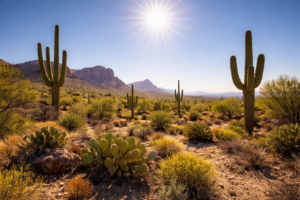 110–115°F (43–46°C). It’s a dry heat, yes, which means sweat evaporates quickly and shade actually helps – but 110°F is still, well, very hot. For year-round living, you have to be okay with the summer season basically being the “indoor” season (kind of the opposite of cold-winter climates).
Most Arizonans plan outdoor activities for early morning or late evening in summer, and the middle of the day is spent in AC-cooled comfort. Some folks even take vacations to cooler places in summer (reverse snowbirds, if you will). The good news is that the heat is predictable and consistent, and there’s no humidity like you’d get in Florida or the Gulf states. Some people prefer the dry heat, others compare it to baking in an oven. However, the payoff is that the rest of the year – roughly October through April – is gorgeous. I’d say, if you hate winter cold more than you mind sweating a bit in summer, Arizona is a fair trade. I personally would much rather deal with a hot summer day (I can always hop in a pool or crank the AC) than scrape ice off my car in winter.
Cost of Living and Other Benefits:
Arizona has become a very popular place to move, and for good reason. Cost of living used to be extremely low, and while it has crept up with demand, it’s still moderate. Housing in Phoenix, for example, is cheaper than in California or the Northeast, but it’s gotten pricier as lots of people moved in. Still, you generally get more house for your money than you would in, say, Los Angeles or New York. Utilities in summer can be high (AC costs), but you save on heating bills in winter. Arizona also has relatively low taxes and is considered business-friendly, which means there are jobs in industries like tech, aerospace, and of course hospitality (those resorts and golf courses need staff!). There’s a reason cities like Phoenix have been among the fastest growing in the nation. Many families and retirees alike choose Arizona for the lifestyle and cost balance. Also worth noting: overall happiness and health metrics for Arizona are pretty solid, partly because sunshine and the ability to be active year-round can do wonders for mood and fitness. There’s a robust outdoor community, from hiking clubs to cycling groups, that you can join any time of year. Just be sure to bring a high SPF sunscreen!
Regional Considerations:
Arizona is a state of two climates: the low deserts (warm) and the high country (cold). So a friendly warning: if you truly hate winter, avoid the northern and high-altitude parts of Arizona. It surprises some people that Arizona even has cold areas, but it does – Flagstaff, for example, is a mountain city in northern AZ that sits at 7,000 feet elevation. Flagstaff gets real winters with heavy snow (often over 90 inches a year!). Beautiful place, but not for the winter-averse. Same goes for places like Show Low, Prescott to some extent, and the North Rim of the Grand Canyon – as they all experience pretty serious snow and cold. The great thing about Arizona is it leaves the choice up to you. If you want four seasons, you can find it up north. If you want endless summer (or at least a very mild winter), stick to the Phoenix metro, Tucson area, Yuma, or the lower desert valleys.
Fun Arizona Fact: Arizona doesn’t observe Daylight Savings Time, so in winter the sun will set fairly early (around 5:30pm in Phoenix in December) – but it also rises earlier. It’s not a huge deal, but some people notice the difference when moving from elsewhere. In any case, when that desert sun is shining, it’s hard to complain. For anyone plotting their escape from icy winters, Arizona shines bright (literally and figuratively) as a top option.
2. Hawaii
-
Average Winter Temperature: ~74–75°F (23–24°C) in coastal areas. For example, Honolulu averages around 80°F high and 65°F low in January – truly balmy.
-
Average Annual Snowfall: 0 inches where people live. (Snow only falls on Hawaii’s highest mountain peaks, such as Mauna Kea, and even there it’s limited to a few winter storms – far away from everyday life in Hawaii.)
-
Average Cost of Living: Extremely high – roughly 85% above U.S. average (Index ~185). Hawaii has the highest cost of living in the nation, mainly due to housing and import costs.
Why Hawaii is Great if You Hate Winter:
When it comes to escaping winter, Hawaii is the ultimate dream. This is the only U.S. state entirely in the tropics, and it shows – Hawaii basically doesn’t have a winter season at all, at least not in the way the rest of us know it. I mean, how can you not love a place where December and July feel pretty similar? In Hawaii, the temperatures are warm year-round. During the so-called “winter” months (roughly December through February), daytime highs in the coastal cities (where almost everyone lives) are in the upper 70s to low 80s°F (about 26–28°C). Nighttime lows might dip into the mid 60s°F (around 18–20°C) on the cooler evenings. To put it another way: the coldest it ever gets for most Hawaiians is like a pleasant spring day elsewhere.
Snow and frost are completely absent in populated areas. You’ll never see a snowflake in Honolulu or on Maui’s beaches. I have a friend who moved to Hawaii from New England specifically because he despised winter – he jokingly told me the only ice he sees now is in his mai tai. That sums it up: life in Hawaii means saying goodbye to scraping ice off your windshield, forever. The only places in Hawaii that see snow are the summits of the Big Island’s tallest volcanoes (Mauna Kea and Mauna Loa) and occasionally Haleakala on Maui. Those are above 10,000 feet elevation and basically uninhabited (except for observatories). So unless you’re an astronomer living on a mountaintop, you will never encounter winter weather in Hawaii. Even rain is not a huge issue in winter – some areas see a bit more rain in the winter months (Hawaii has a wet and dry season rather than a temperature-defined winter), but it can rain at 78°F, which is a far cry from a cold downpour on the mainland.
What Life Feels Like in a No-Winter Paradise:
Living in Hawaii is like enjoying an endless summer, with a gentle “cool season” that’s still beach weather most days. People here fully embrace the outdoors and the culture reflects it. Surfing is a way of life – fun fact: the biggest surf on Oahu’s famous North Shore actually comes in winter (North Pacific storms send huge waves), so it’s high season for surfing competitions and beach spectating. Even if you’re not a surfer, you’ll find plenty to do outside: swimming, snorkeling, hiking through lush forests, paddle-boarding, or just relaxing on the sand can be year-round hobbies. If you’re from a cold climate, your first winter in Hawaii will likely blow your mind a little. There’s a saying: “the weather in Hawaii only changes to keep things interesting” – meaning it might go from sunny to a brief warm shower and back to sunny, but it’s almost always in a pleasant temperature range.
Holiday season in Hawaii is unique and wonderful. Locals decorate palm trees with Christmas lights, and you might hear Hawaiian-style Christmas songs about Santa wearing aloha shirts. It’s a festive spirit but without the frostbite. One of the charming things is that locals will consider it “cold” when it dips below 70°F at night – you’ll see people put on a light hoodie or say they’re chilly, which is kind of funny and adorable (After a while, your body adjusts too, so be careful before poking too much fun!). If you’ve spent years suffering through icy winters, this climate can feel like a huge boost to your overall happiness. It’s no surprise that Hawaii often ranks as the happiest state in America – the warm weather and natural beauty play a big role in that.
Community and Lifestyle Considerations:
Hawaii isn’t just about the weather; it has a rich local culture and a laid-back pace of life known as the “Aloha spirit.” People generally are friendly, and life moves a bit slower and more relaxed than the mainland hustle. Not having to battle winter can reduce stress – no winter depression from grey skies, no hazardous driving on ice. You can plan outdoor events months in advance without worrying they’ll be snowed out. Health-wise, many find they stay more active and feel better physically in Hawaii’s climate (I certainly felt that way – it’s easier to go for a morning jog when it’s 72°F and sunny than when it’s 20°F and dark). If you love nature, Hawaii’s got an incredible variety – from beaches to waterfalls to volcanoes – and you can explore them year-round.
The Big Downside – Cost and Distance:
As amazing as Hawaii is, living there comes with two main challenges: the cost of living and the geographic isolation. Hawaii is expensive, no sugarcoating it. Housing is the big one – buying a home or even renting in Hawaii (especially in Honolulu or on Maui) can be astronomically high. Island living means limited space and a lot of demand. Additionally, many goods have to be shipped in, which raises prices for almost everything. A gallon of milk or gas in Hawaii will shock you if you’re not prepared. So, while your heating bill will be zero, you’ll need to budget more for other things.
Many people work multiple jobs or live in multigenerational households to make it work, unless they have a solid income or savings. That said, some of the more rural areas of Hawaii have relatively more affordable pockets, but jobs there can be more scarce. Which brings me to the other point: isolation. Hawaii is over 2,000 miles from the mainland, so you can’t just take a road trip to the next state. Visiting family or having them visit you involves a long (and sometimes pricey) flight. Some people feel island fever after a while – the sense of being confined to a small area. But others absolutely love it and say the ocean around them is freeing, not confining.
For many, these downsides are worth the trade-off. If you’re able to handle the finances or maybe you’re moving with a remote job or retirement income, Hawaii might be your personal paradise where winter is simply a non-issue. Just imagine: in January, instead of shoveling snow, you’re shoveling sand to build a sandcastle on a sunny beach. If that sounds like a dream come true, Hawaii might be calling your name.
A Quick Note on Weather Extremes:
Hawaii’s weather is incredibly pleasant, but it’s not 100% perfect all the time. The state does have a wetter season (roughly November to March) when some areas, especially the northeastern sides of the islands, getting more rain. But usually that means occasional warm showers that pass quickly. You might get a rainy day here or there, but nothing too cold. Hawaii can also be susceptible to tropical storms or hurricanes, though direct hits are rare. And because it’s tropical, you’ll deal with things like mosquitoes year-round and perhaps more concern about sun exposure (the UV is strong). But let’s be honest: those concerns are minor when you compare them to blizzards, ice storms, and polar vortexes. In Hawaii, a “bad winter day” might be a day it rains and you can’t go to the beach. Honestly, bad weather in Hawaii just gives you time to hit up a museum or go shopping while you wait for the sun to pop back out. All in all, for anyone plotting a permanent escape from winter, Hawaii is pretty much the pinnacle.
1. Florida
-
Average Winter Temperature: ~59–60°F (15°C) statewide average. In Central/South Florida, winter highs are typically 65–75°F (18–24°C). For example, Orlando’s average January high is ~72°F, and Miami’s is ~76°F. Nights are cooler (around 50°F in Orlando, 60°F in Miami).
-
Average Annual Snowfall: 0 inches. Snow is virtually unknown in Florida – most of the state has not seen measurable snowfall in decades (a few flurries may fall once in a blue moon in the far north, but generally 0”).
-
Average Cost of Living: ~2% above U.S. average (Index ~102). Housing costs vary by area, but Florida benefits from no state income tax and relatively moderate overall costs compared to many northern states.
Why Florida is Great if You Hate Winter:
Florida isn’t nicknamed “The Sunshine State” for nothing – this place is the quintessential refuge for winter haters. If you’re fed up with freezing temperatures, Florida might just feel like paradise. Winter in Florida is basically non-existent in the way most Americans experience winter. From about November through March, Florida enjoys mild, spring-like weather while much of the country shivers. In most of Florida, especially the central and southern regions, daytime winter temperatures are commonly in the 70s°F (around 21–25°C). Even in North Florida (Jacksonville or the Panhandle), winter highs often reach the 60s°F. Nighttime can get chilly by Florida standards – sometimes down into the 40s°F in the north, 50s in central, and 60s in the far south – but it’s very rare for temperatures to go below freezing except maybe a couple nights a decade in the far northern interior.
As someone who absolutely loathes the cold, I felt like I struck gold the first time I spent January in Florida. Walking outside in short sleeves in the middle of what used to be “winter” for me was a surreal joy. And the best part: no snow. Truly, almost the entire state of Florida never sees snow. There was that one time in 1977 where it flurried in Miami for a few minutes – Floridians still talk about it because it was such a freak event. In recent memory, maybe the extreme northwest Panhandle might get a light dusting once a decade. But generally, the concept of shoveling snow or dealing with icy roads is alien to Floridians. If you hate winter, Florida offers you a life where you swap blizzards for palm trees and sunshine.
Living the Winter-Free Life in Florida:
Florida’s lifestyle has basically been built around its warm climate. In winter, life just continues as normal – actually, even more lively, because winter is the most pleasant time of year. Instead of hunkering indoors, Floridians and visitors alike are out and about. Outdoor activities are endless. Love the beach? You can stroll the beach or even take a dip in South Florida waters year-round (the ocean water might cool to around 70°F near Miami in winter, which is swimmable for many folks, especially those escaping 30°F air back home!). Into golf or tennis? Florida is a golfer’s mecca, and the courts and courses stay busy even in January. The state is also famous for its fishing, boating, and water sports – during winter, the weather is prime for sailing or kayaking since it’s not oppressively hot or stormy. One thing I love is that Florida’s winter is actually the dry season in most of the state. That means you get crisp, clear days with low humidity and little rain – basically picture-perfect weather. There’s a reason so many big events are scheduled in winter in Florida: from art festivals to the Daytona 500 (in February), to holiday boat parades, you name it. Theme parks like Disney World and Universal operate year-round, and winter is an awesome time to visit them with cooler temps and smaller crowds.
Culturally, Florida has a huge population of transplants and retirees who moved specifically for the climate. So you’ll find a community of like-minded people who will gladly commiserate about “the winters we escaped” up north while lounging on a patio in January. There’s a whole phenomenon of “snowbirds” – people from cold states who either temporarily live in Florida for winter or have moved permanently – and they infuse the local culture with their appreciation for the sunshine. As a full-time resident, you might chuckle at how the seasonal residents flood in come November, but you’ll probably also relate to why they’re there. Locals who grew up in Florida often have never even seen snow in person. To them, winter is just a slightly cooler time when they might put on jeans instead of shorts. Kids in Florida actually get excited to visit snow somewhere else because it’s a novelty – imagine that, needing to travel to experience winter! For someone like me, who only wants to see snow in pictures, that sounds wonderful.
Year-Round Considerations – Heat, Hurricanes, and Humidity:
We have to address the elephant in the room: Florida’s climate is a double-edged sword. Winters are phenomenal – that’s why Florida is #1 on this list – but summers are hot, humid, and can be stormy. If you choose Florida for year-round living, you’ll trade the absence of winter for the presence of a very long, warm, and wet summer. From about May through September, much of Florida is steamy (day highs in the 90s°F, 32°C+, with high humidity). You’ll experience almost daily afternoon thunderstorms during the peak of summer, which actually can be a nice cooler (and they often pass quickly). Air conditioning is not just a luxury; it’s a necessity in Florida summers. Some people find the summer heat tough, but others say “hey, at least I don’t have to shovel heat!”
Another aspect of Florida life is the hurricane season (June through November, with peak around August-October). Florida does get hit by tropical storms and hurricanes occasionally, which is a serious consideration. It’s kind of the flip side of not getting blizzards – you instead keep an eye on the tropics as fall approaches. Not every year brings a hurricane landfall, of course, and Floridians are pretty resilient and prepared for these events. It usually boils down to having a plan, maybe shutters for windows, and being ready to evacuate if a big one comes to your area. Many long-time residents will tell you they’d still take the infrequent hurricane scare over a guaranteed months-long winter of misery. It’s all perspective.
Affordability and Appeal:
On a positive practical note, Florida can be relatively affordable compared to many northern states, especially when you factor in taxes. Florida, like a few others on this list, has no state income tax, which is a huge draw. Many people move from states with a higher tax burden and immediately feel the financial relief from not paying those state taxes. Housing costs in Florida vary: cities like Miami and parts of South Florida can be expensive; however, there are plenty of areas in Florida with reasonable housing prices. This is especially true in smaller cities or inland areas of the state.
Overall, Florida’s cost of living is around the national average or a tad above. Groceries and utilities might be a bit higher (air conditioning bills, etc.), but again you won’t have hefty heating bills or need expensive winter clothing or car maintenance for salt and snow damage. Florida also has a strong economy in certain sectors – tourism is big, yes, but also healthcare (to serve that large retiree population), aerospace (around Cape Canaveral), agriculture, and growing finance/tech hubs in cities like Tampa and Miami. So whether you’re retired or still working, there are opportunities and advantages to living in Florida beyond just the weather. Be sure to keep an eye on Florida’s burgeoning insurance problem however, as skyrocketing costs in this area can contribute to rising cost of living in the future.
Regional Picks and Avoiding the Unexpected Cold:
While almost all of Florida is “winter-hater” friendly, I’ll note that the farther south you go in the state, the warmer the winters. South Florida (Miami, the Florida Keys, Fort Lauderdale, Naples) has a true tropical climate where freezing temperatures essentially never happen. Central Florida (Orlando, Tampa, Cape Coral) is only slightly cooler – an odd frosty morning might occur in the outskirts once in a long while, but generally it’s T-shirt weather by midday. North Florida (Jacksonville, Tallahassee, Pensacola) has the closest thing to a winter in Florida – meaning they might get a few nights each winter that dip into the 30s°F (near freezing) and perhaps once in a generation a flurry of snow. But even there, daytime highs are usually in the 50s or 60s°F in winter, and any cold snap is brief. If you truly never want to feel even a hint of frost, stick to central and south Florida.
For example, I’d recommend the Tampa Bay area, Orlando area, or anywhere further south. Some other areas like Tallahassee (in the Panhandle, inland) can occasionally get a bit of winter-like cold that’s not representative of Florida’s broader climate. It’s still mild compared to anywhere north of Florida, but – if I’m nitpicking – Tallahassee has pretty low temperatures during freak winter events and even very light snow decades ago. So, if that notion bothers you, go south!
In summary, Florida takes the crown because it blends a truly winter-free climate with lots of other pretty fantastic attributes if you’re somebody who can’t stand the cold. Plenty of amenities, a diverse range of cities and lifestyles (from laid-back beach towns to big vibrant cities), and the overall environment that so many who despise winter have sought out. It’s no accident Florida’s population swells every year. A huge chunk of America dreams of living where winter can’t reach them, and Florida is usually the first answer. If you’re a cold weather refugee, Florida might just be your happiest destination.
Final Thoughts: If you’re someone who truly hates winter weather, the seven states above are basically your shortlist for a happier, sunnier life. Each of these states offers a unique flavor of warmth – from the arid deserts of Arizona and Nevada to the tropical breezes of Hawaii and Florida, to the gentler Southern charms of South Carolina, the big-sky mildness of Texas, and  the famously perfect climates of California. There’s something here for everyone, whether you’re looking for a laid-back beach vibe or a bustling city that never sees snow.
A few tips from my experience: visit first if you can – experiencing a “winter” (or lack thereof) in these places first-hand will help you decide what suits you best. Also, consider the year-round picture: no winter is awesome, but make sure you’re okay with what the summers bring (be it heat, humidity, or crowds of snowbirds). Don’t forget to factor in cost of living in your planning; a warm climate is lovely, but you want to enjoy life comfortably too.
One thing’s for sure – relocating to avoid winter can be life-changing. Imagine January days filled with sunshine, being able to take a walk outside without bracing yourself against a chill, never having to scrape ice off your car or cancel plans due to a snowstorm. Your winter blues might just turn into permanent summer smiles. I know mine did, and I haven’t looked back. Here’s to finding your personal warm haven – may your future be full of sunny skies and zero snow! Enjoy the endless summer, and leave that winter coat behind for good.
Read other great articles like this here on Wild Child Sports:
- Best States for Dirt Biking
- Extreme Sports Quotes by Extreme Sports Athletes
- Top 5 States with the Most National Parks
- Quotes to Help You Face Your Fears