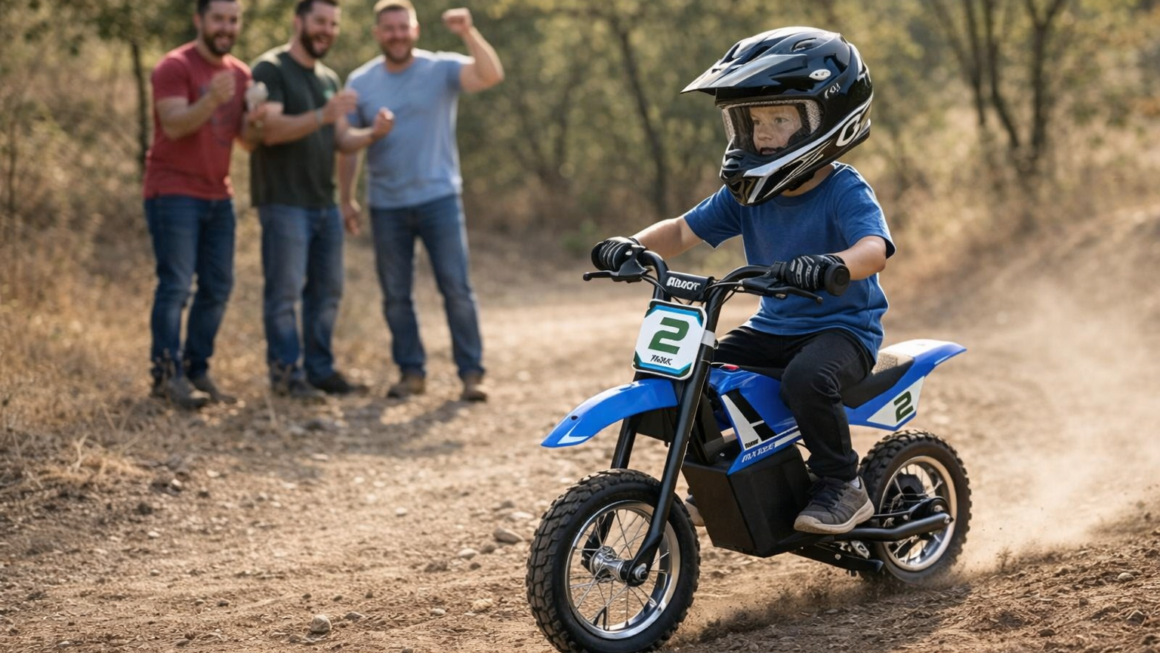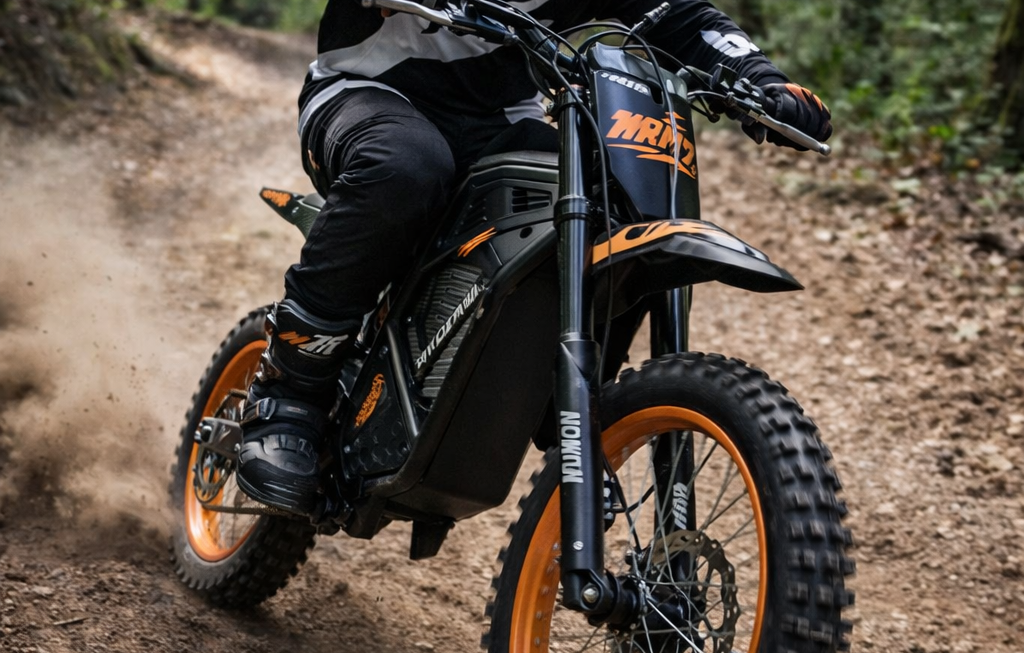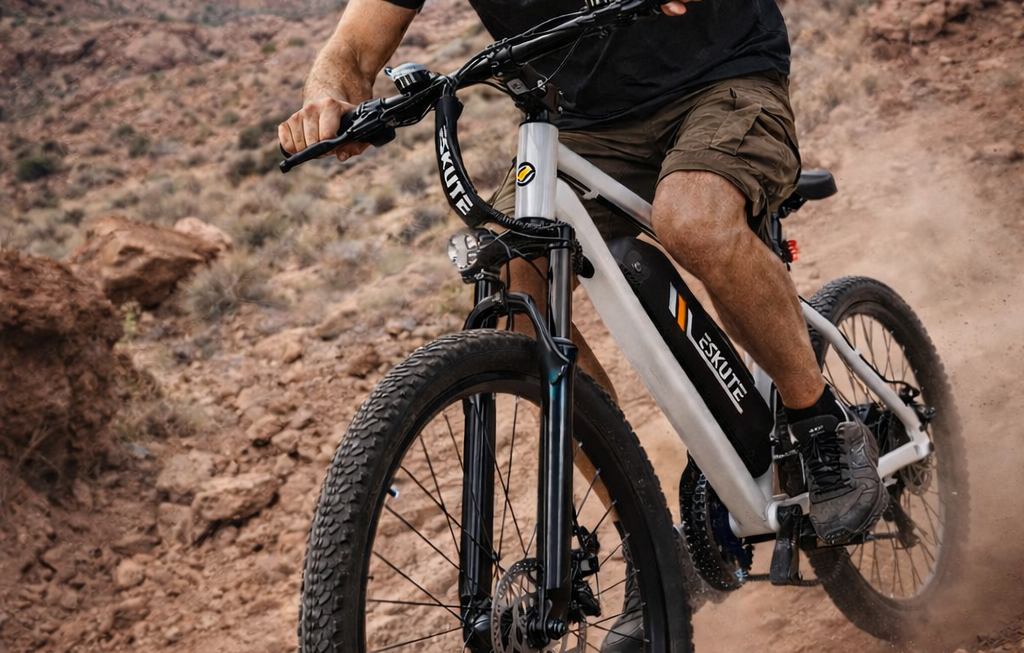
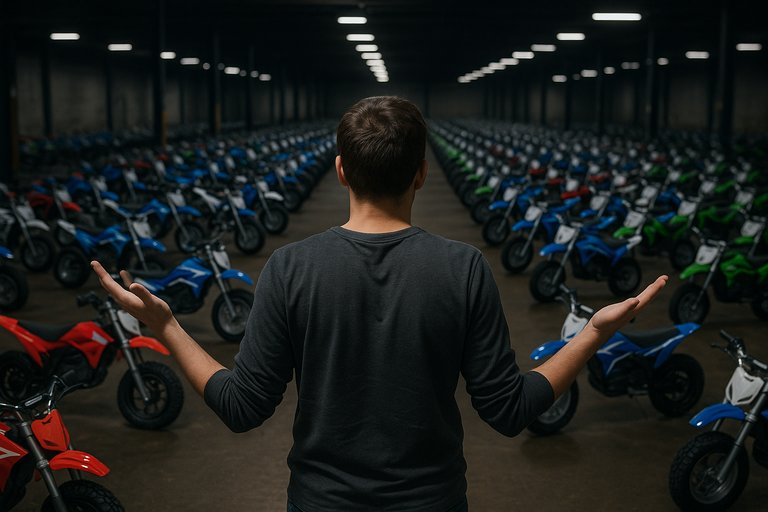
If you’re browsing “electric dirt bike” on Google hoping to stumble into a great deal, buckle up. You’ll find bikes priced like mountain bikes, some like commuter e-bikes, and a few like small cars. The problem is, those numbers often hide reality. Batteries with mediocre range, controllers that overheat, or “top speeds” that are fantasy claims. Buying any kind of vehicle can be a formidable undertaking and buying an electric dirt bike is no exception. You want to make sure you’re getting a great deal on a great bike and, most important of all, make sure you’re not getting screwed over in the process.
Before you drop your hard-earned cash on an e-dirt steed, you need a checklist that separates the real deals from the hype. Here’s what to look for — from motor specs to warranty fine print — along with war stories (yes, I make mistakes too… rarely). Now, let’s get practical and look at what you need to buying when buying a new bike. Let’s begin.
1. Motor Type & Power: More Than a Fancy Number
Hub vs. Mid-Drive (or Crank-Drive)
Many bikes use a hub motor — the motor sits in the wheel. Others use a mid-drive or crank motor — pushing the chain or crank. Hub motors are simpler and cheaper, but in technical terrain, they struggle (less torque, more heat, harder maintenance). Mid-drive systems offer better balance and torque distribution but cost more.
If you’re hitting trails with tight turns, roots, and elevation changes, favor mid-drive. For flatter, more casual trails, a decent hub motor may suffice.
Wattage & Torque: Don’t Trust the Hype
A “2,000W” label means nothing if the battery and controller can’t sustain it. Look for continuous watt rating, not peak. More importantly, torque (measured in Newton-meters, Nm) tells you how strong the bike feels off the line and uphill.
Tip: a beginner’s model of 1,500–3,000W continuous with ~80–150 Nm torque is a good sweet spot. Anything less gets flustered on climbs; anything more can flick you over your bars if you’re not ready.
2. Battery, Range & Charging Specs
This is where 90% of buyers get hoodwinked.
Capacity, Chemistry & Cell Quality
Battery specs are given in voltage (V) and amp-hours (Ah). Multiply them for watt-hours (Wh) — that’s your real capacity. A 72V, 20Ah battery = 1,440 Wh (or 1.44 kWh). Expect somewhere between 1 to 2.5 kWh in decent ride-worthy bikes.
Also check what brand of cells are inside (Samsung, LG, etc.). Cheap no-name cells degrade fast.
Real-World Range (not the marketing fluff)
Many bikes claim “50 miles range.” Reality: that’s on flat terrain, low speed, minimal throttle use. In mixed trail conditions with climbs, expect 30–60% of that. Use ranges better as estimates, not guarantees.
Charge Time & Swap Capability
If it takes 6 hours to charge, long rides are limited. Prefer bikes that support fast charging (0–80% in ~1–2 hours). Bonus points if the battery is swappable — so you can carry a spare and ride longer.
Thermal Management & BMS (Battery Management System)
Overheating kills range and longevity. Make sure the bike has active cooling (air vents, heatsinks) and a solid BMS to protect cells from over/under voltage, temperature extremes, and short circuits.
3. Weight, Frame Design & Ergonomics
You want the bike to move like you want, not fight you.
Total Weight & Weight Distribution
A light bike helps handling—but don’t sacrifice adequate battery or frame strength just to shave kilos. Weight distribution is key: battery in the center, low, to keep the center of gravity manageable.
Frame Strength & Materials
Aluminum alloy frames are common. But check weld quality, gussets, and reinforcement. A flimsy frame flexes, creaks, and eventually fails. If the bike looks beautiful but feels cheap in structure, that’s a red flag.
Seat Height & Reach
You must be able to comfortably touch the ground (or control the bike) when stopped. If the seat is too tall or your reach is too stretched, confidence crumples. Ask for standover clearance and test in person when possible.
Suspension & Adjustability
Suspension matters — you’re not riding on pavement. Look for adjustable forks and rear shock (rebound, compression, preload). Travel should match your terrain: 8–10 inches (200–250 mm) is ideal for aggressive trail use.
4. Controller, Software & Ride Modes
A powerful motor is useless without a controller and firmware that shape how it behaves.
Programmability & Ride Modes
Good bikes offer ride modes (eco, medium, sport) so new riders don’t get torqued off. Also, ability to fine-tune throttle curves, regen settings, or limit top speed (handy for trail compliance).
Heat Handling & Duty Cycle
Controller needs to handle heat. A controller rated only for 30% duty cycle in uphill sections will overheat and shut down mid-ride. Look for ratings, cooling, or derating curves.
Regenerative Braking (Optional but Nice)
Some bikes let you recover energy on deceleration. Not massive gains, but helpful on long descents. Just make sure it’s well calibrated — too aggressive regen can upset handling.
5. Tires, Wheels & Brakes
No point having torque and battery if the tires spin or brakes fade.
Wheel & Tire Fitment
Standard sizes (e.g., 21″ front, 19″ or 18″ rear) give you options. Don’t get stuck in proprietary sizes that make replacing tires a pain. Tire type (knobby, semi-slick) must match your terrain.
Brakes & Stopping Power
Hydraulic disc brakes are the baseline. Prefer larger rotor diameters (e.g., 250 mm+). Also look for quality pads, bleeding access, and possibly dual-piston or four-piston calipers depending on power.
Suspension & Wheel Path Interaction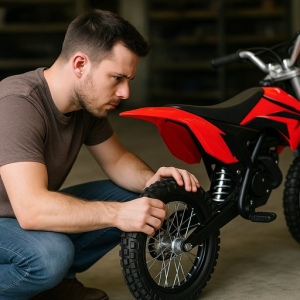
Suspension geometry should be optimized for braking. A poorly tuned geometry will make even good brakes feel mushy. If possible, test brake feel in real life.
6. Durability, Waterproofing & Maintenance
You’re going to ride in dirt, mud, water, rocks—your bike better not flinch.
IP Ratings & Sealing
A solid e-dirt bike is at least IP65 or IP67 water/dust protection. Exposed wiring, poor seals, or vulnerable connectors are easy failure points. You want a bike that expects to be sprayed, not baby-wiped.
Serviceability & Parts Availability
Can you buy a replacement controller, battery, or motor? Are service centers close? A cool bike with zero support is a very expensive paperweight someday.
Chain, Sprocket & Drivetrain
Quality drivetrain components (chain, sprockets, guards) will save you heartache. A cheap chain stretches and causes slack, leading to power losses and errant slaps.
Warranty & Support
Look for multi-year warranties, especially on battery and controller. Also check fine print (what voids warranty? water damage? dropped?) and how claims are handled (shipping cost? local vs. factory).
7. Real-World Usability & Practical Features
Specs are great. Real usability makes or breaks enjoyment.
Charging Port Location & Cable
If your port is in a hard-to-reach spot, or your cable is obnoxiously short, you’ll curse it daily. Good bikes allow easy cable access and 2–4m cables so you can charge without reshuffling your garage.
Display, Gauges & Feedback
Analog dials are nostalgic but less useful. Prefer TFT or LCD that shows speed, battery %, range estimate, error codes, ride mode. Bonus: Bluetooth app connectivity for diagnostics and firmware updates.
Ergonomic Controls & Comfort
Throttle response, switch placement, grip feel—all small but essential. A rough control interface is a daily annoyance.
Noise & Smoothness
One of the joys of e-dirt bikes is the silence and instant torque. If the bike feels jagged in low throttle or jerky on transitions, that’s bad firmware or controller tuning.
8. The Trade-Offs (Why Nothing Is Perfect)
Yes, you will compromise. No bike is perfect.
-
Range vs. Weight: More battery = more kWh = heavier bike. There’s a balance.
-
Power vs. Heat: More power without cooling fails.
-
Cost vs. Quality: Cheap bikes will cut corners.
-
Simplicity vs. Configurability: More modes, more settings = complexity.
-
Support vs. Brand Novelty: A known brand with support is worth more than a flashy startup without spares.
Recognizing trade-offs ahead of time keeps your expectations realistic and your regrets minimal.
9. War Stories (Because Yes, I Learned by Failing)
-
The Overconfident Range Fail: On my second e-bike trip, I trusted the “60 miles range” claim while riding hills. Midway, the battery gauge flashed red, and I limped home at 10 mph. Lesson: never trust flat-range marketing claims.
-
The Controller Burnout: Bought a bike with a neat little controller but no active cooling. After 15 minutes of steep climbs, controller overheated and shut down. Walked the bike downhill to safety.
-
Fit Folly: I once picked a slick-looking bike with a seat high as hell. At rest stops, I hopelessly hovered above the ground like a penguin. Buy test fit first.
Don’t make the same mistakes I have in the past and make sure to do plenty of research both online and in person to make sure you buy the electric dirt bike that’s right for you. If you’re considering a Razor electric dirt bike, check out our Razor Electric Dirt Bikes Buyers Guide!
10. Suggested Models & Entry-Level Options (with Caution)
Here are a few examples people often see (not endorsements — do your homework):
-
Sur-Ron Light Bee / Ultra Bee — popular mid-level bikes with a large community. Be careful: stock suspension sometimes needs upgrade.
-
Storm Bee / Talaria models — appearing in newer buyer guides with competitive specs.
-
HappyRun G60 / G100 — more budget / lightweight options, decent for casual trails.
-
E Ride Pro / Altis Sigma — premium bikes with long range, heavier price tags.
Use these as benchmarks, not sold labels. Always verify specs, support, and service.
Final Thoughts & Buying Blueprint
 Buy smart, not emotionally. Use this checklist when you shop: motor type, power/torque, battery capacity & cooling, frame & ergonomics, controller & firmware, durability & warranty, real-world usability, and trade-offs.
If your pick checks the boxes, you’ll spend more time ripping than regretting. Once your bike is dialed, next thing is pairing it with solid gear — check out our Ultimate Gear Guide [link to your gear guide] so you don’t ruin your ride with bad boots or a weak helmet.
Welcome to electric two-wheeled insanity. May your battery last longer than your ego. If you want to find some of the great places across the country you can take your bike out for a ride, check out the Top 10 Best Dirt Bike Trails in the and be sure to make sure to look into the Top Dirt Bike Helmets to Keep you Safe While Riding to keep that noggin safe when going off on any crazy jumps. Safe riding!