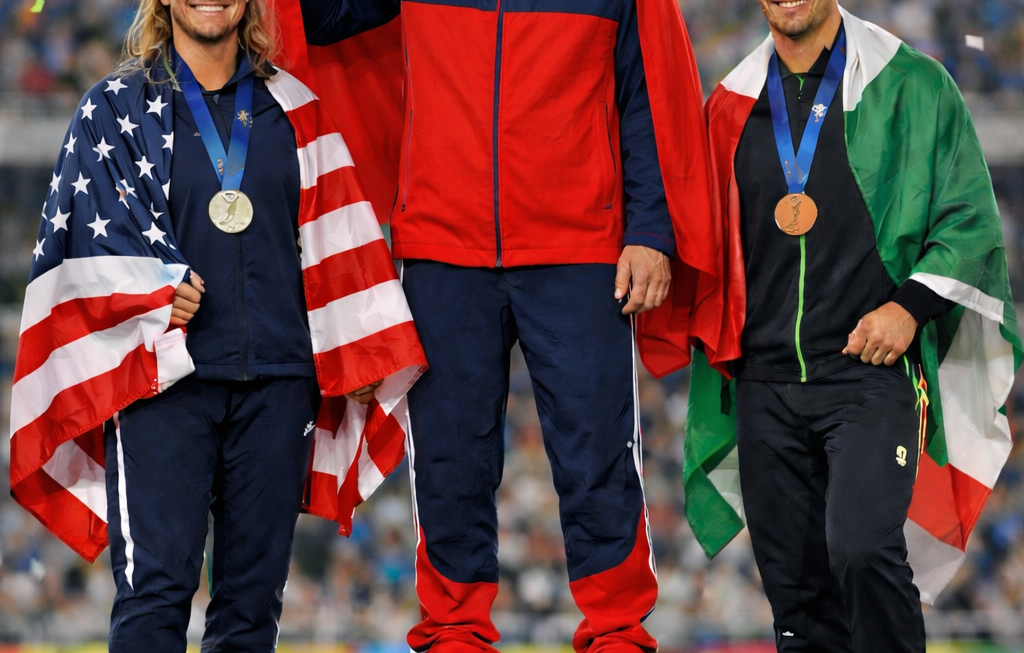
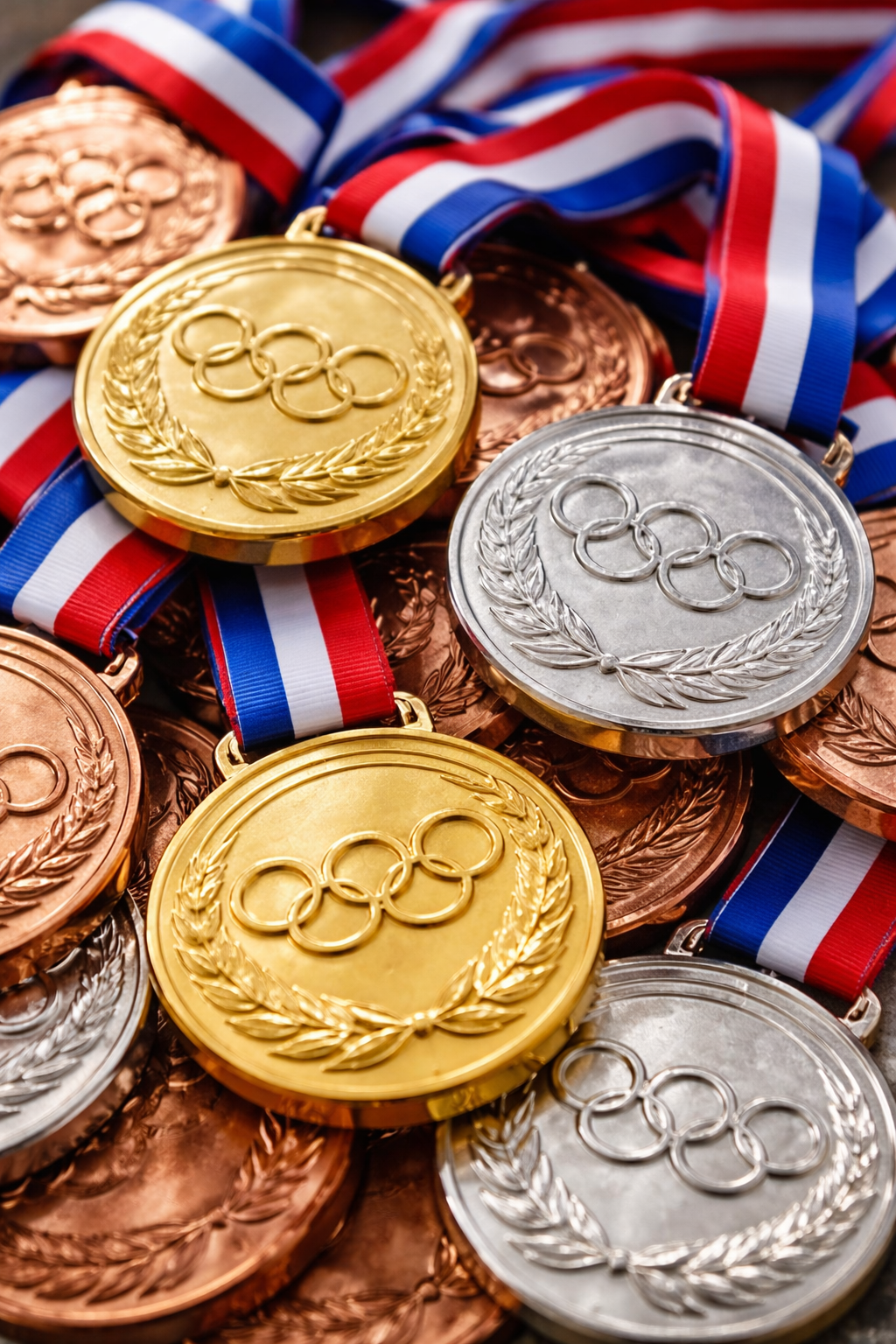
Who has the most Winter Olympic medals of all time?
Who has the most Winter Olympic medals? If you’ve ever wondered, you’re in good company. With so many legendary athletes gracing the Winter Games, one person stands above the rest as the most decorated Winter Olympian of all time. Her name? Marit Bjørgen. A cross-country skiing superstar from Norway, Bjørgen has won 15 Olympic medals in her career – more than any other athlete in Winter Games history.
The Most Decorated Winter Olympian: Marit Bjørgen
Meet Marit Bjørgen – the athlete with the most Winter Olympic medals in history. Hailing from the snowy forests of Norway,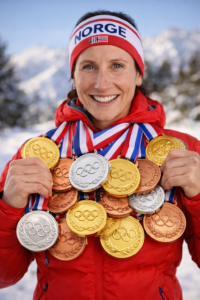 Marit Bjørgen is a retired cross-country skier who dominated her sport for over a decade. Born in 1980 in a small town, Bjørgen grew up skiing on local trails and dreaming of Olympic glory. Little did she know she would one day rewrite the record books. Representing Norway in five Winter Olympics (2002, 2006, 2010, 2014, and 2018), Bjørgen amassed an unprecedented medal haul on the Olympic trails. She combined raw endurance, sprint speed, and Norwegian ski tradition to become virtually unbeatable in many events. Bjørgen’s friendly personality and fierce competitiveness made her a fan favorite, earning her the nickname “Queen of Cross-Country.” But it’s her medal count that truly cements her legacy.
So, who is the most decorated Winter Olympic athlete? It’s Marit Bjørgen, and here is a quick overview of her Olympic medal collection and achievements:
Sport: Cross-Country Skiing (various distances and relay events)
Olympic Teams: Norway (2002, 2006, 2010, 2014, 2018)
Total Winter Olympic Medals: 15 – the highest ever in Winter Games history.
Gold Medals: 8
Silver Medals: 4
Bronze Medals: 3
With 15 total medals (8 gold, 4 silver, 3 bronze), Bjørgen holds the record for the most Olympic medals won by any Winter Olympian, male or female. She also tied the record for the most Winter Olympic gold medals (eight). No one has more golds at the Winter Games than her. Beyond the numbers, each of those medals tells a part of her story, from breakthrough victories to triumphant comebacks.
A Quick Biography of a Winter Legend
The Beginning
Marit Bjørgen’s journey to the top of Winter Olympic history is a story of perseverance and peak performance. She made her  Olympic debut at the 2002 Salt Lake City Games as a relatively unknown 21-year-old. There, she snagged her first medal (a relay silver). This would only be the beginning. Over the next few years, Bjørgen developed into a dominant force on the World Cup circuit, known for her powerful technique and versatility across different cross-country skiing events. By the time of the 2006 Turin Olympics, she was among the favorites in multiple events, and she added another Olympic silver to her tally.
However, Bjørgen truly hit her stride at the 2010 Vancouver Winter Olympics. In Vancouver, she delivered an unforgettable performance, winning five medals at a single Games – three gold, one silver, and one bronze. This was the moment the world fully took notice of Marit Bjørgen. She topped the medal table in Vancouver, more than any other athlete (male or female) at those Games. Whether it was sprinting past the competition in short races or outlasting everyone in endurance events, Bjørgen was a one-woman medal machine. She struck gold in the individual sprint, the 15 km pursuit, and the 4×5 km relay (leading a strong Norwegian team). She also took a bronze in the 10 km freestyle and a silver in the 30 km classic, showcasing her range across distances. By the end of 2010’s Olympics, Bjørgen had established herself as the star of the Games, and her career total had leapt to 5 medals.
The Streak Continues…
Fast forward to 2014 in Sochi, Russia, and Bjørgen proved that her Vancouver success was no fluke. At the Sochi Olympics she captured three more gold medals. She won the skiathlon, the 30 km freestyle mass start, and the team sprint. Those victories not only added to her growing medal count but also made her the most successful female Winter Olympian at that time, surpassing previous record-holders like Russia’s Raisa Smetanina and Italy’s Stefania Belmondo (who each had 10 medals in their careers). Bjørgen’s total after Sochi stood at 10 Olympic medals, tying the female record – but she wasn’t finished yet.
The grand finale of Bjørgen’s Olympic journey came at the 2018 PyeongChang Winter Olympics in South Korea. At 37 years old, an age when many skiers have long retired, Marit Bjørgen once again delivered a show-stopping performance. Competing in her fifth Olympics, she added five more medals to her collection: two gold, one silver, and two bronze. Notably, she won gold in the women’s 4×5 km relay and capped off her career with a dominant gold in the 30 km classic mass start – the very last women’s race of those Games.
That final gold was particularly poetic: Bjørgen skiing alone across the finish line, well ahead of the field, as if to put an exclamation point on her Olympic legacy. It brought her total to 15 medals, pushing her past every other Winter Olympian in history. In PyeongChang she also picked up a silver in the 15 km skiathlon and bronzes in the 10 km freestyle and team sprint, proving her consistency yet again. When the 2018 Games ended, Marit Bjørgen officially stood as the Winter Olympic medal record holder.
 The Ending
Bjørgen announced her retirement from competition shortly after the 2018 Olympics, going out on top as the most decorated Winter athlete ever. Her illustrious career also included 18 World Championship gold medals and 114 World Cup race wins, but it’s the Olympic feat that captures the imagination of sports fans worldwide. These incredible accomplishments led the public and press to nickname her the “Queen of Cross-Country Skiing” due to her unparalleled success.
It’s worth noting that Bjørgen achieved many of these medals while balancing real-life challenges. In 2015, between the Sochi and PyeongChang Olympics, she gave birth to her first child and took a break from competition. Many wondered if she could return to top form – and she answered with a resounding yes, coming back stronger and adding those final Olympic medals as a first-time-mom. This makes her story even more inspiring and relatable.
Olympic Highlights and Records
Beyond the medal count, Marit Bjørgen’s Olympic career is studded with highlights and interesting facts:
Multiple Medals at Single Games:
-
Bjørgen won at least one medal in every Olympics she attended, and she won multiple medals in three of them. Her five medals in 2010 (Vancouver) tied a record for the most medals by a woman at a single Winter Olympics. She repeated a five-medal performance in 2018 (PyeongChang) as well. An incredible bookend to her career eight years later. Talk about consistency!
Record-Breaking pin PyeongChang:
-
When Bjørgen clinched her final medals in 2018, she surpassed the previous record for total Winter Olympic medals. Before her, the highest count was 13 medals. Bjørgen didn’t just eek past the record– she pushed it to 15. At the closing ceremony of the PyeongChang Games, she was often mentioned as the athlete of the Games. Not just for her age-defying performance, but for making history as the new Winter Olympic medal record-holder.
Most Decorated Winter Olympian, Third-Most Decorated Olympian Overall:
-
With 15 medals, Bjørgen isn’t just the Winter Games leader; she’s high on the all-sport list too. In fact, as of 2026, she sits third in the list of most Olympic medals by any athlete (summer or winter). Only two Summer Olympians – swimmers Michael Phelps (28 medals) and Soviet gymnast Larisa Latynina (18 medals) – have won more. Bjørgen is tied with Soviet gymnast Nikolai Andrianov (15 medals) in third place overall. Considering that Winter athletes typically have fewer events to compete in than swimmers or gymnasts, Bjørgen’s achievement is monumental.
A Range of Events:
-
One reason Bjørgen was able to gather so many medals is her versatility. Cross-country skiing offers a variety of events: sprints, medium-distance pursuits, long-distance races, and team relays. Bjørgen was competitive in all of them. This adaptability is rare, and it maximized her medal opportunities. Not to mention, she competed in both classical and freestyle techniques with great success.
Leadership and Team Success:
-
Some of Bjørgen’s medals came from team events, such as the 4×5 km relay and team sprint. She was often the anchor of
 Norway’s relay team, skiing the final leg and securing victory (or a podium spot) under pressure. Her presence on the team undoubtedly lifted her teammates’ performances. In the relay events, she earned multiple medals. It’s fair to say she helped Norway maintain its dominance in cross-country skiing, a sport that is a source of national pride. She has certainly been a factor in Norway having more Winter Olympic medals than any other country.
In short, Marit Bjørgen’s Olympic career was the perfect blend of longevity, peak performance, and big-moment delivery. She raced against and alongside other legends, like Poland’s Justyna Kowalczyk and fellow Norwegian Therese Johaug, and always rose to the occasion. There are few athletes worldwide that can match her grit, discipline, and overall success in their respective sport.
Other Legendary Winter Olympians (who has come close)
While Marit Bjørgen sits on the Winter Olympics medal throne, she’s not the only athlete with an eye-popping medal tally. Here are some of the other most decorated Winter Olympians and how they compare:
Ole Einar Bjørndalen (Norway, Biathlon) – 13 Olympic Medals:
-
Before Bjørgen’s rise, Ole Einar Bjørndalen was often dubbed the “King of the Winter Olympics.” A biathlete, Ole collected 13 Olympic medals over six Olympics (from 1994 through 2014). He is the most decorated male Winter Olympian to date. His medal haul includes 8 gold medals – tying him with Bjørgen and Bjørn Dæhlie for the most Winter golds – along with 4 silver and 1 bronze. Bjørndalen initially broke the overall Winter medal record at the 2014 Sochi Olympics when he claimed his 13th medal, surpassing the previous record of 12. For a few years, he held the top spot until Bjørgen took it in 2018. Today, Bjørndalen’s 13 medals still stands as the second-highest total – a testament to his exceptional career.
Ireen Wüst (Netherlands, Speed Skating) – 13 Olympic Medals:
-
Tied with Bjørndalen with 13 medals is Dutch speed skater Ireen Wüst, the most decorated Olympic speed skater of all time. She earned her medals across five Olympics (2006 through 2022), racking up 6 gold medals (the rest silvers and bronzes) in races ranging from 1000m to 1500m to team pursuits. In 2022, at age 35, Wüst won gold in the 1500m and bronze in the team pursuit. This brought her career total to 13 and cemented her status in the record books. She announced her retirement after 2022, finishing as the Netherlands’ most successful Olympian ever (summer or winter).
Bjørn Dæhlie (Norway, Cross-Country Skiing) – 12 Olympic Medals:
-
We can’t discuss Winter Olympic legends without mentioning Bjørn Dæhlie. A cross-country skier like Bjørgen (and also Norwegian), Dæhlie was the face of Winter Olympics success in the 90s. He accumulated 12 medals (8 gold, 4 silver) across three Olympics For a long time, Dæhlie held the record as the most decorated Winter Olympian. In fact, his eight gold medals are still a record for Winter Games (tied with Bjørgen and Bjørndalen). Many in Norway and beyond consider him to be one of the greatest cross-country skiers ever.
Who dominates the Winter Olympics?
Cross-country skiing and speed skating are well-represented in the ranks of top Winter Olympians. This makes sense – these sports offer multiple events and distances, giving athletes multiple chances to medal at each Games. Biathlon, as in Bjørndalen’s case, also has multiple events. By contrast, sports like figure skating or alpine skiing have fewer medal opportunities per athlete, which is why their greatest champions (while legendary) might not accumulate the raw numbers that the Nordic skiers or speed skaters can.
It’s fascinating that Norway – a relatively small country – produces so many of these Winter Olympic medal record-holders. The top three Winter Olympians (Bjørgen, Bjørndalen, Dæhlie) are all Norwegian, showcasing the country’s winter sports culture and dominance. Norway actually has the most Winter Olympic medals of any country. Find which other countries round out the Top 5 Countries with the Most Winter Olympic medals here.
Future Challengers: Who Could Break the Winter Olympic Medal Record?
As of 2026, Marit Bjørgen’s record of 15 Winter Olympic medals remains intact. But records, as the saying goes, are made to be broken – eventually. So, who on the horizon could possibly accumulate a medal haul approaching or surpassing Bjørgen’s? It won’t be easy (it will likely take years of Olympic appearances and consistent excellence), but here are a few current Winter Olympians to watch in the medal count race:
Johannes Thingnes Bø (Norway, Biathlon):
- Often just called JT Bø, JT is a biathlon champion and, interestingly, a protege of Ole Einar Bjørndalen’s generation. At the 2022 Beijing Olympics, Bø was a standout athlete, winning five medals in six biathlon events (including 4 gold medals and 1 bronze). Combined with his previous medals from 2018, that brings Bø’s total to 8 Olympic medals (5 gold) at just two Olympics. He’s only in his late 20s and shows no signs of slowing down, continuing to dominate World Championships and World Cups. If Bø competes in the 2026 and 2030 Winter Games with similar success, he could inch very close or even surpass Bjørgen’s 15.
Johannes Høsflot Klæbo (Norway, Cross-Country Skiing):
-
The next cross-country superstar from Norway, Klæbo is another athlete who could challenge long-term records. Klæbo burst onto the scene in PyeongChang 2018 at age 21, winning 3 gold medals in his Olympic debut. This led to him becoming the youngest ever male gold medalist in cross-country skiing. Klæbo is also in his mid-20s and is expected to compete for years to come. If healthy and motivated, he could race in two or three more Games. Given his early success, it’s not unreasonable to imagine the young star approaching double-digit medals soon. He specializes in sprints but has also improved in distance races. This means he often enters multiple events each Olympics – giving him chances to podium multiple times. While it’s early to say he’ll get to 15, the conversation has started. Can Klæbo one day become the “next Bjørgen” in terms of Olympic hardware? Time will tell.
Arianna Fontana (Italy, Short Track Speed Skating):
-
We mentioned Fontana earlier as having 11 medals, the most in short track history. Notably, she achieved that by medaling at five different Olympics already and will soon compete in her sixth (the 2026 Games in her home country Italy). If Fontana does medal in Milan-Cortina 2026, on home ice, she could potentially add a couple more medals. Fontana becoming the most decorated Winter Olympian of all time in her home country of Italy at the Milano-Cortina Olympic games would be a story for the ages.
In truth, reaching 15 Winter Olympic medals is extraordinarily difficult. It requires not only talent and hard work but also longevity, health, and a bit of luck across multiple Olympic cycles. Many athletes peak for one or two Olympics but can’t maintain that over four or five editions. That’s what makes Bjørgen’s and others’ totals so astounding. The upcoming athletes like Bø and Klæbo have a shot if things go perfectly, but it could be a decade or more before we see anyone nearing Marit Bjørgen’s record.
Who Has Most Olympic Medals of All Time (Winter and Summer Combined)?
For additional context, you might wonder how Winter Olympians compare to the Summer Olympic giants in terms of medal counts. As mentioned earlier, Winter athletes generally have fewer events available (for example, a swimmer can potentially swim in a dozen races in one Olympics, whereas a skier might enter 5-6 at most). However, the all-time Olympic medal record holder is indeed a Summer Olympian: Michael Phelps.
Michael Phelps (USA, Swimming) – 28 Olympic medals (23 gold)
-
Phelps is in a league of his own, with a total that likely won’t be matched by anyone, winter or summer, for a very long time. His 28 medals were won over five Olympics (2000 through 2016), and his 23 golds are an Olympic record for any athlete. In the peak of his career (Beijing 2008), he famously won 8 gold medals at one Olympics. No Winter athlete can compete in 8 events in one Games, for perspective!
Larisa Latynina (USSR, Gymnastics) – 18 Olympic medals (9 gold)
-
Latynina held the overall Olympic medal record for many decades (since the 1960s) until Phelps surpassed her in 2012. She is still the top female on the overall list. She competed in the 1950s-60s and collected her medals in gymnastics events.
Marit Bjørgen (Norway, Cross-Country Skiing) – 15 Olympic medals (8 gold)
-
Yes, Bjørgen’s mark places her third in the all-Olympics rankings as of 2026. She’s tied with Nikolai Andrianov, a Soviet men’s gymnast who also won 15. It’s truly extraordinary when you think about it that way. Her 8 golds are also among the highest gold medal counts. Phelps has 23, Latynina with 9, and Bjørgen tied with several others at 8.
So while Marit Bjørgen is the Winter Games record holder, she’s still behind the absolute Olympic record held by Phelps. However, within the Winter sphere, Bjørgen stands supreme. Looking for more Olympic inspiration? Check out these incredible Quotes from Winter Olympic Athletes to keep you motivated.
 Conclusion
In the grand tapestry of the Olympic Games, Marit Bjørgen’s record 15 Winter Olympic medals shine brightly. She is, without question, the most decorated Winter Olympic athlete in history. From her humble beginnings skiing in Norway to becoming an Olympic legend, Bjørgen’s story is one of talent, determination, and consistency at the highest level of sport. She has inspired countless young skiers and has secured her legacy as a Winter Olympic icon.
For now, Marit Bjørgen remains the Winter Olympic medal record holder. As we approach the upcoming Winter Games (Milano-Cortina 2026 is just around the corner), it will be exciting to see if anyone can start chipping away at that total. Whether or not the record is broken soon, the pursuit of Olympic greatness by each new athlete adds to the rich history of the Games. No matter who holds the title, all these athletes are some of the most
Check out these other great articles here at Wild Child Sports:
- Best Places to Camp for Free in the United States
- Ruixue Unisex Thermal Gloves Review
- Top 5 Best States for Dirt Biking (Ranked)
- The Best Ski Resorts in the U.S.